
Pakistan is a lower-middle-income country with a GDP of USD 263.7 billion with service, industrial, and agriculture the three major contributing sectors. Being one of the major segments, the agriculture sector is considered the lifeline of the country and contributes around 24% to the Gross Domestic Product (GDP) and employs more than 35% workforce.
Recently with the technological shift and foreign investments in startups, the agriculture sector has also seen technological developments. As per the estimation more than 25 Agri-tech companies are operating in the market.
These include e-market agri-ventures, tech-enabled farm advisory services, precision agriculture, online input providers, farm-to-market services, agricultural insurances, digital agri-credits, and supply chain services.
Before moving to the agri-tech segments it is critical to understand how a traditional agricultural value chain operates in the country. The traditional cropping cycle shows how both formal and informal sectors are deeply involved.
For instance, farmers rely on informal sources such as arthi, family, and friends, along with formal institutions like banks and microfinance institutions (MFIs) for financing. Similarly, inputs like
seeds, pesticides, and fertilizers are purchased from dealers, companies, or middlemen.
For selling crops, farmers may sell to government bodies, mills/factories, or informal markets. With the rise of agri-tech, companies are now integrating into different stages of this value chain.
Agriculture has been an essential part of Pakistan’s economy since the very beginning. Although Pakistan is ranked 7th in the world in terms of value added from Agriculture, farming has been on the decline. Pakistan’s agricultural sector has major roles to play in its economy as it provides food for the people, raw material for the industry, brings in foreign exchange, and provides a market for industrial goods and machinery. However, the share from agriculture in Pakistan’s GDP has been falling as it was 53% in 1949-50 to 24% in 2021-22 1. Once self sufficient, the country is now dependent on importing essential food items, in the current fiscal year (2022-23) Pakistan has faced an initial shortfall of 3 million metric tonnes in wheat production.
Livestock also has the highest potential for growth and poverty alleviation in the short term in Pakistan. It is considered critical for the livelihood of landless rural population as well as subsistence level farmers specially women who do not own any other assets either. Women who undertake much of the work in this sector are unable to reap any benefits.
Restricted mobility, no access to markets, the health and quality of the livestock, the shortfall in production of staple foods are a few of several issues that are being faced by Agriculture and livestock in Pakistan. These need to be discussed and solutions need to be found. Farm management in Pakistan remains archaic and the farm holdings are disaggregated. The bulk of the country’s holdings are small farm holdings of less than 5 acres. Not only does this make it difficult to implement changes and policies, it also presents challenges in increasing yield and improving the condition for farmers.
Water scarcity and wastage is another major concern for Pakistan. It is the 5th most vulnerable country to climate change and has been categorized as having extremely high level of water stress. In 2017 Pakistan used 363.64% of our internal water resources (much more than can be replaced through natural resources). Having a negative relationship with GDP, poorer countries have been using more water. In 2017, Pakistan used 93.98% share of its fresh water for agriculture and is projected to reach water scarcity by 2025. In 2018, Pakistan’s 53.22% land was irrigated (the deliberate provision or controlled flooding of agricultural land with water) which is not a sustainable method.
For agriculture to remain viable and sustainable, it is also essential to improve the income of farmers. This can be done in several ways. For example, improving the yield per acre off what the farmer is sowing, improving the quality and financing of inputs such as fertilizer, seeds herbicides, pesticides etc. Improving the timing and weather-related advisories. Use of modern technology in monitoring the crop from the time it is sowed to the time it is harvested.
Furthermore, the essential contribution of women in Pakistan’s agricultural productivity and ensuring household food security is substantial, with statistics indicating that 72 percent of women are associated with agriculture sector out of the total women labour force in Pakistan. Even though their contribution is essential to the sector, their status, contribution, challenges they face are not considered and structural discrimination exists.
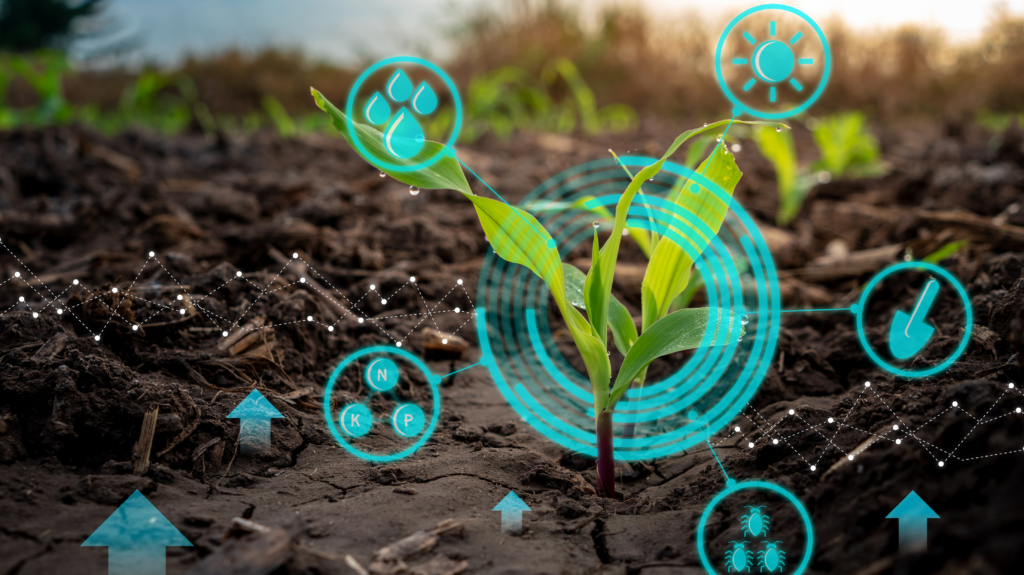
Digital technologies can serve as “enabler” for establishing and maintaining productivity, food security, and increasing environmental benefits. Adoption and acceptance of digital farming technologies is important. An enabling environment is necessary with cross cutting and relevant digital transformational policies and an emphasis on multi-level integration. There has been no major improvement in farming technology since the sixties. For example, in comparison to neighboring countries with similar land and environment, an acre of land in Pakistan produces substantially low yield and a cow produces less amount of milk.
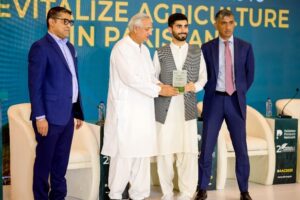
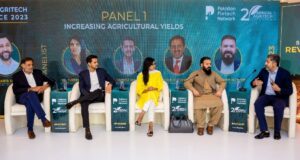
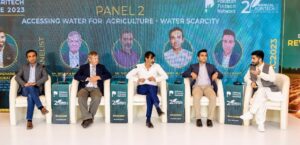
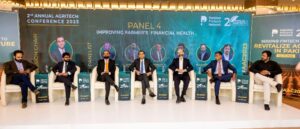
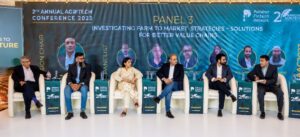
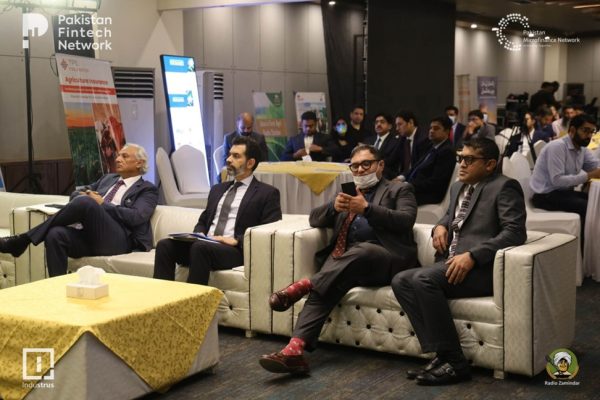
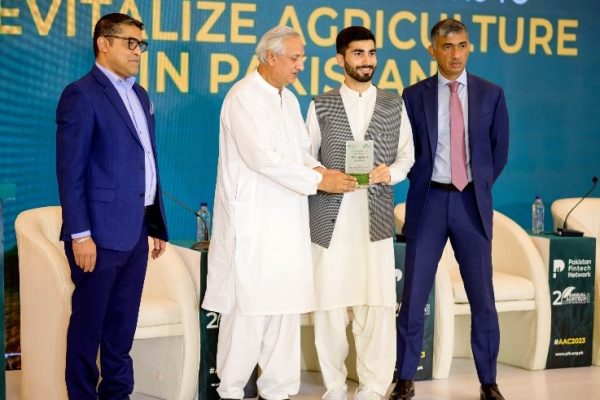
The purpose of the Agritech conference is to bring together stakeholders that can help regain Pakistan’s true stature in agriculture. The conference can serve as a starting point to initiate the discussion and find potential collaborative opportunities and solutions to the pressing issues being faced by Agriculture in Pakistan. This platform can be used by the agricultural value chain players to discuss ways in which to digitize the value chain, improve farmers’ access to formal financial products/services, better cropping tools, technology, reduce the information asymmetry, remove wastage and conserve agricultural resources. The conference will also include an overarching focus on gender mainstreaming agriculture in Pakistan with each panel discussion taking up the topic during their sessions.